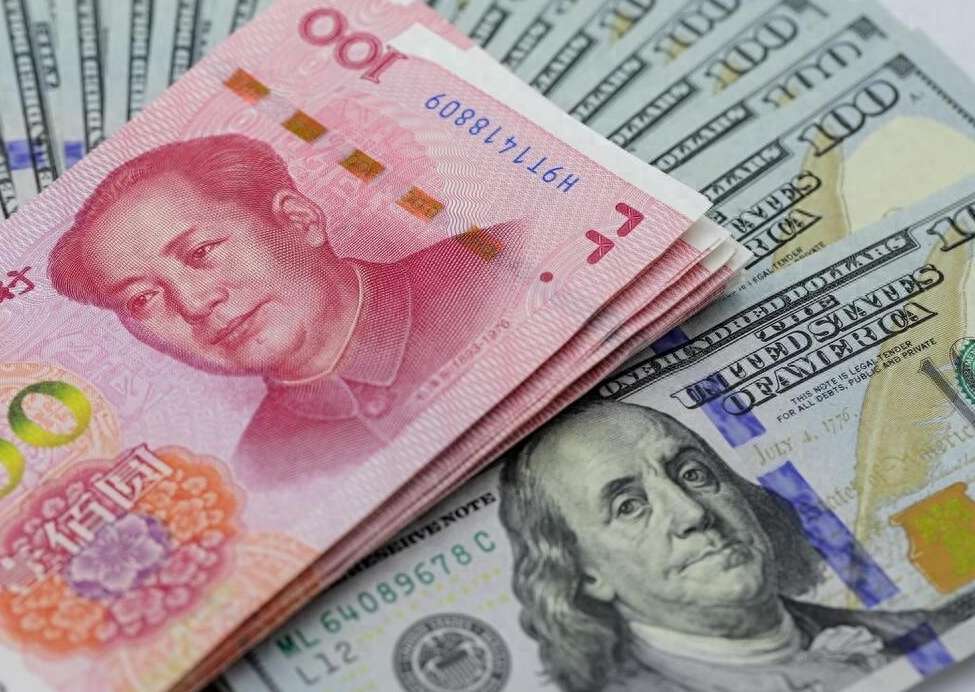
Let's cut through the jargon. When financial news screams "dollar strength" or warns of a "weakening dollar," it often feels abstract. But these shifts hit you directly—in the price of your next vacation, the returns on your international stocks, and the cost of goods at your local store. A strong dollar means the U.S. dollar buys more of a foreign currency. A weak dollar means it buys less. This isn't just forex trader talk; it's a fundamental force that reshapes global economics and personal finance. I've seen investors get this wrong for years, focusing solely on stock prices while ignoring the silent tax—or bonus—applied by currency moves.
What You'll Discover
What Exactly Is a Strong or Weak Dollar?
We measure the dollar's strength using indexes like the U.S. Dollar Index (DXY), which tracks it against a basket of other major currencies (Euro, Yen, Pound, etc.). When the DXY rises, the dollar is strengthening or appreciating. When it falls, the dollar is weakening or depreciating.
The cause is usually a mix of interest rate differentials (higher U.S. rates often attract foreign capital, boosting demand for dollars), relative economic growth, and global risk sentiment (the dollar is a classic "safe-haven" asset).
Real-World Examples You Can Feel
Let's translate this into everyday life. Imagine two distinct periods.
Scenario 1: The Strong Dollar Experience (Like in 2022-2023)
You're planning a trip to Europe. Last year, 1 USD got you about 0.95 Euros. Now, with a stronger dollar, 1 USD gets you 0.92 Euros. Wait, that's less? I'm using a real, recent example to make a point—even within a "strong" cycle, there are cross-currents. But historically, a truly strong dollar period, like the mid-2010s, saw 1 USD buying 0.85+ Euros. The effect is clear:
- Travel & Shopping Abroad: Your money goes further. That 100-euro dinner in Paris costs you $108 instead of $120. Luxury goods, hotels, and tours become relatively cheaper for Americans.
- Imported Goods: The smartphone, car parts, or furniture manufactured overseas costs less for U.S. companies to import. This can translate to lower prices or higher margins, potentially dampening inflation.
- At the Gas Pump: Oil is priced in dollars globally. A strong dollar can make oil cheaper for the U.S., as other currencies buy fewer dollars and thus less oil, increasing global supply relative to demand. This isn't a perfect correlation, but it's a persistent pressure.
Scenario 2: The Weak Dollar Experience (Like in 2003-2008)
Now flip it. The dollar is weak. That European vacation becomes a luxury.
- Travel Pinch: If 1 USD only gets you 0.75 Euros, that same 100-euro dinner now costs you over $133. Your travel budget shrinks dramatically.
- Import Costs Rise: Those imported goods become more expensive, contributing to inflationary pressures within the U.S. economy.
- Export Boom: Here's the upside for the U.S.: American-made goods (Boeing airplanes, John Deere tractors, California wine) become cheaper for foreign buyers. This boosts U.S. exports, supports manufacturing jobs, and helps large U.S. multinationals.
| Scenario | For U.S. Travelers & Consumers | For U.S. Exporters & Manufacturers | For U.S. Importers & Retailers |
|---|---|---|---|
| Strong Dollar | Foreign travel & goods are cheaper. Purchasing power abroad increases. | Harder to compete overseas. Foreign revenue worth less when converted back to USD. | Lower cost for imported inventory. Potentially higher profits or lower prices. |
| Weak Dollar | Foreign travel & goods are more expensive. Purchasing power abroad decreases. | Easier to compete overseas. Foreign revenue worth more in USD. | Higher cost for imported inventory. Squeezed margins or higher consumer prices. |
How Dollar Strength Directly Impacts Your Investment Portfolio
This is where most individual investors are blindsided. You buy a great German stock or a broad European ETF. It goes up 10% in Euro terms. But if the Euro has fallen 12% against the dollar during that period, you've actually lost money in U.S. dollar terms. Currency moves can wipe out or supercharge your international returns.
Asset Class Reactions:
U.S. Multinational Stocks (e.g., Apple, Coca-Cola): A strong dollar hurts. A significant portion of their earnings comes from overseas. When those foreign profits are converted back to a stronger dollar, they shrink. Analysts often downgrade earnings estimates during strong-dollar cycles.
International Stocks (Non-U.S.): For a U.S. investor, these face a double layer: the stock's local performance PLUS the currency translation. A weak dollar provides a powerful tailwind, boosting your USD returns.
Commodities (Gold, Oil): Often priced in USD, they typically have an inverse relationship with the dollar. A strong dollar makes commodities more expensive for holders of other currencies, reducing demand and pushing prices down. Gold is a classic weak-dollar/high-inflation hedge.
U.S. Treasuries: Strong dollar periods often coincide with higher U.S. interest rates, which can depress Treasury bond prices. However, the strong dollar itself can attract foreign investment into Treasuries, creating a complex dynamic.
The Broader Economic Ripple Effect
Beyond your portfolio, currency strength reshapes economies.
Strong Dollar's Economic Impact: It can be a deflationary import, helping to cool inflation by making imports cheap. However, it can also widen the U.S. trade deficit (imports rise, exports fall) and pressure emerging market economies that have borrowed heavily in U.S. dollars, making their debt repayments more expensive. The International Monetary Fund (IMF) frequently publishes reports on global financial stability that highlight these spillover effects.
Weak Dollar's Economic Impact: It acts as a stimulus for U.S. industry, boosting exports and narrowing the trade deficit. It can contribute to inflation via higher import prices. It also reduces the debt burden for emerging markets with dollar-denominated debt.
Actionable Strategies for Different Dollar Environments
You don't need to be a currency speculator. You need a mindful portfolio adjustment.
When the Dollar is Persistently Strong:
- Focus on Domestic-Focused U.S. Stocks: Look for companies that generate most revenue within the U.S. (e.g., utilities, regional banks, many retailers). They are insulated from forex headwinds.
- Be Selective with International Exposure: If investing abroad, consider hedging the currency risk through hedged ETFs (e.g., tickers like HEFA for Europe or HEDJ for Japan). Or, focus on countries with currencies that may hold up better against the dollar.
- Re-evaluate Commodity Holdings: Understand that a strong dollar is generally a headwind for broad commodity indices.
- It's a Great Time to Travel: Seriously, leverage your personal purchasing power.
When the Dollar is Persistently Weak:
- Overweight International and Emerging Markets: You get the potential for both local market growth and a currency boost. Unhedged ETFs are your friend here.
- Favor U.S. Multinationals and Exporters: Companies like Caterpillar or Deere stand to benefit.
- Consider Commodities and Gold: As a potential hedge against both a weak dollar and the inflation it can import.
- Look at Large-Cap U.S. Tech with Caution: A significant portion of their earnings is international, which is a tailwind now, but be aware of the valuation.
Your Currency Questions, Answered
Should I avoid international stocks entirely when the dollar is strong?
Avoiding them entirely is a mistake. It's about selectivity and structure. During strong dollar regimes, I lean towards hedged share classes or ETFs for developed markets (Europe, Japan) where currency volatility can erase gains. For emerging markets, the calculus is different—local growth dynamics can sometimes overpower dollar strength, but the risk is higher. It's a reason to underweight, not omit.
How can I easily track if the dollar is strong or weak?
Bookmark the U.S. Dollar Index (DXY) on any financial site. Look at the trend, not the daily noise. A sustained move above its 200-day moving average suggests a strong trend. Also, watch the Federal Reserve's interest rate policy—rising rates relative to other central banks are the most reliable fuel for dollar strength.
Is a weak dollar bad for the U.S. economy?
It's not inherently bad. While it can stoke inflation, it's a powerful automatic stimulus for U.S. manufacturing, agriculture, and tourism. The pain is concentrated on consumers buying imports and companies reliant on them. The benefit is spread across export industries and job creation in those sectors. Policymakers often quietly welcome a moderately weak dollar.
What's the biggest mistake investors make regarding currency effects?
Ignoring them until it's too late. They see their international fund is flat for the year and blame the stock-picking. Often, it was a brutal currency move. The second mistake is trying to time forex markets directly—it's incredibly difficult. The smarter play is to understand the prevailing regime (strong/weak) and tilt your existing portfolio structure accordingly, as outlined above.
Do currency-hedged ETFs always work as intended?
No, and this is critical. Hedging has a cost (the interest rate differential between countries). In a environment where U.S. rates are much higher than, say, Eurozone rates, holding a hedged European ETF incurs a persistent "carry cost" that can drag on returns. Hedging is best used as a tactical tool during clear, momentum-driven strong-dollar periods, not as a permanent "set-and-forget" holding.
Comments
0